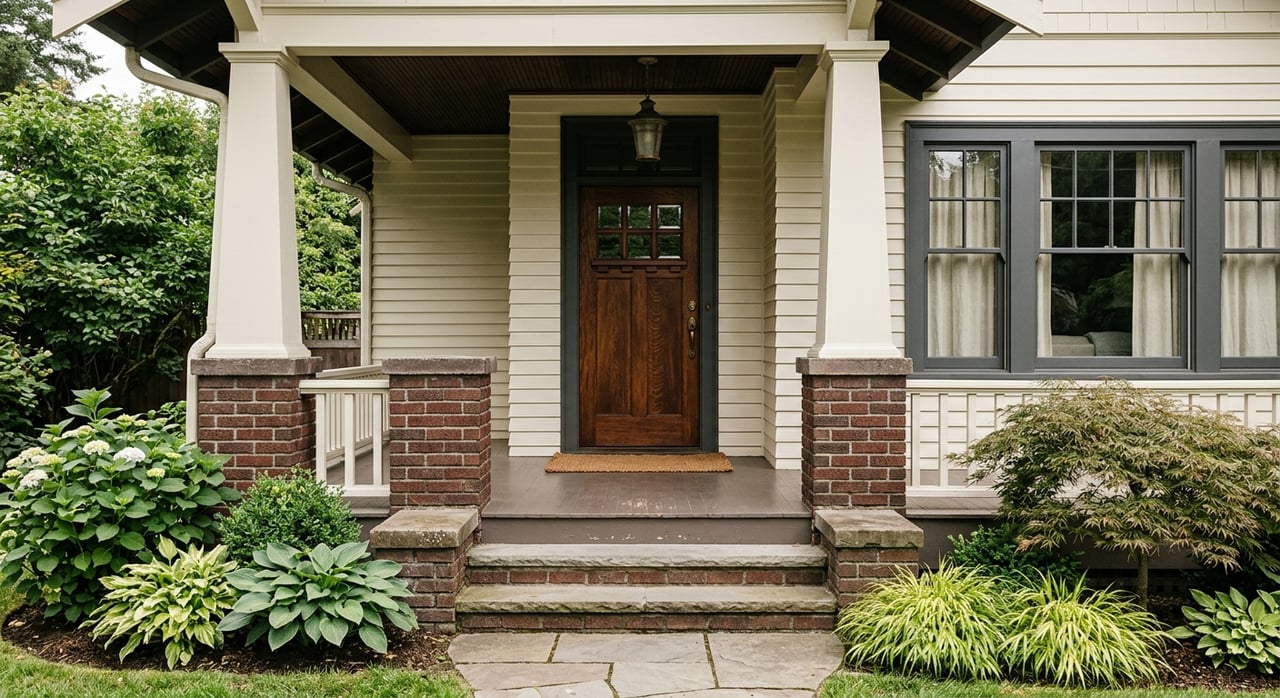
If you think Carrollton homes all look the same, a quick drive through town will prove otherwise. In one part of the city, you may see porches, gables, and century-old architectural details near downtown. In another, you may find ranch homes, traditional resales, cottages, townhomes, or brand-new construction on anything from a compact lot to several acres. If you are buying or selling in Carrollton, understanding how style connects to location can help you make a smarter move. Let’s dive in.
Carrollton offers more variety than many buyers expect
Carrollton has a broad mix of housing types, but single-family detached homes still define much of the market. According to the citywide housing study, they make up 46% of the housing inventory, while townhomes account for just 3%. The same study also notes that 35% of all housing units are more than 50 years old.
That mix helps explain why Carrollton can appeal to very different types of buyers at the same time. You can find older homes with character, established resale homes with practical layouts, and newer construction in several formats. As of April 30, 2026, Zillow estimated Carrollton’s typical home value at $286,558, with homes going pending in about 33 days and 203 active for-sale listings.
Historic homes near downtown Carrollton
If you are drawn to architecture and in-town living, Carrollton’s historic areas offer some of the city’s most distinctive homes. The Carroll County Historical Society’s historic district tour highlights areas such as Dixie Street, Tanner and East Center Streets, and Bradley Street. In these areas, the housing mix includes Victorian and Queen Anne homes, Folk Victorian houses, Craftsman bungalows, Neoclassical and Colonial Revival homes, Dutch Colonial Revival houses, and even Sears and Roebuck kit homes.
What stands out in these homes is often the detail, not necessarily a modern floor plan. Features like porches, spindlework, dormers, exposed rafters, classical columns, gables, and mixed rooflines show up again and again in the historic core. If you love originality and architectural character, this part of Carrollton may feel very different from newer neighborhoods on the city’s edge.
The downtown area around Historic Adamson Square also adds to the appeal for many buyers. The city describes it as the center of restaurants, shops, services, and events. That means some historic-home buyers are not just choosing a house style, but also choosing proximity to downtown activity.
What to know about historic district rules
If a home is located in the historic district, exterior changes are reviewed through the Historic Preservation Commission using a Certificate of Appropriateness process. That does not make historic ownership a bad fit. It simply means you should understand the review process before planning exterior updates.
For sellers, that same context matters when positioning a historic property. Buyers in this segment are often looking closely at architecture, condition, and how the home fits within the district setting. A strong strategy starts with comparing your home to the right historic or in-town competition, not to a generic citywide average.
Established resale homes in Carrollton
Between the historic core and the newest developments, Carrollton also has a large middle band of established homes. The housing study says much of the downtown-core and major-corridor housing was built before 1980, and single-family detached homes are concentrated in the northeast, southwest, and near the edges of the municipal boundary.
In practical terms, this part of the market often includes ranch and traditional homes with features many buyers still want today. Common examples include primary bedrooms on the main level, garages, basements, and 3- to 5-bedroom layouts. These homes may not always have the historic detailing of downtown properties or the untouched finishes of new construction, but they can offer a very functional mix of space, yard, and value.
Current resale examples show just how broad this category can be. One 1970 home on 7th Street includes 3 bedrooms, 2 baths, 1,160 square feet, a 2-car garage, a basement, and a 0.34-acre lot. Another 1970 home on North Lakeshore Drive offers 4 bedrooms, 2.5 baths, 2,240 square feet, a finished basement, and a 0.76-acre lot.
The takeaway is simple: in Carrollton, age does not automatically tell you the full story. An older home may sit on a compact lot near town, or it may offer a larger yard and more flexible space. That is why buyers should compare homes by location, layout, and lot utility, not just by year built.
New construction in Carrollton keeps expanding
New construction in Carrollton is not limited to one price point or one type of neighborhood. The city’s FY2024-25 State of the City report shows a range of projects underway, including 35 single-family homes at Stewart Landing priced from $650,000, 47 small cottages at East Chase priced from $300,000, and 3-bedroom, 2-bath townhomes at The Collective priced at $290,000. The city also reported 83 active-adult homes at The Preserve at the Birches priced from the $400,000s, plus an 80-unit downtown mixed-use project.
The city reported 113 new single-family residential permits in the same fiscal year. That activity supports what many buyers are already seeing on the ground: Carrollton’s newer inventory is growing in several directions at once. You may find a smaller new home on a modest lot, a cottage-style option, a townhome, or a larger custom-style property with more land.
Current listing examples reflect that range. A new-construction home on Crescent Boulevard appears with 3 bedrooms, 2.5 baths, 1,429 square feet, and a 0.25-acre lot. Another new-construction home on Deerfield Lane shows 1,847 square feet on 0.68 acre, while a new-construction property on Hays Mill Road is listed with 6 bedrooms, 5.5 baths, 4,500 square feet, and 3.25 acres.
Why new homes vary so much by location
Carrollton’s housing study says most post-2000 residential growth has happened on the city edge or along commercial corridors. That pattern helps explain why newer homes in Carrollton can feel very different from one another. Some are built for convenience and lower-maintenance living, while others lean toward larger floor plans or more acreage.
The same study also notes that Carrollton has consistently produced new single-family homes under $300,000 even as prices have risen. At the same time, townhomes remain a relatively small part of the city’s existing stock, even though additional townhome units have been in planning, development, or construction. For buyers, that means new construction can offer flexibility, but inventory type still matters.
Lot size often shapes the lifestyle
In Carrollton, lot size can be just as important as architectural style. Older in-town homes may sit on roughly one-third of an acre even when the homes themselves are substantial. Current examples include a 1920 home on Clifton Terrace on 0.34 acre, a 1922 property on Dixie Street on 0.72 acre, and a 1900 home on Broad Street on 0.37 acre.
Newer homes can range just as widely. Some newer subdivision homes appear on lots around a quarter acre, while other new-construction properties stretch well beyond that. The examples in the current market run from 0.25 acre to 3.25 acres.
That is why it helps to think of Carrollton as a location-and-lot-size spectrum. If you want walkability to downtown and historic character, you may trade for a smaller or more compact lot. If you want newer systems, more square footage, or more land, your search may naturally move toward the city edge or corridor growth areas.
How buyers can narrow the right home style
If you are buying in Carrollton, start by deciding what matters most in your day-to-day life. A beautiful historic home may offer unmatched charm, but you will want to be comfortable with an older layout and, in some cases, historic district review for exterior changes. A resale ranch or traditional home may offer the best balance of function, yard space, and price.
If low-maintenance living or newer finishes are at the top of your list, new construction could be the better fit. That said, not all new homes solve the same problem. Some focus on entry-level or right-sized living, while others are designed for buyers who want more square footage, a premium finish level, or acreage.
A smart search compares homes within the right subcategory. Looking at a historic bungalow, a 1970s ranch, and a new edge-of-city build as if they are direct substitutes can make pricing and value feel confusing fast. The better approach is to compare homes by style, location, lot, and likely buyer appeal.
How sellers can position their home well
For sellers, one of the biggest mistakes is using the wrong comparison set. A historic home near downtown should be marketed around its architecture, setting, condition, and district context. An established suburban resale should be framed around layout, storage, garage space, basement utility, and yard function.
New construction and newer resale homes need a different lens. Buyers will often compare them directly against current builder offerings, incentives, finishes, and nearby resale options. That means pricing, presentation, and timing need to reflect what a buyer can get elsewhere in the same segment.
This is where strategy matters. In a market like Carrollton, your home style is part of the story, but it is never the whole story. The right plan connects your home’s design, location, lot, and condition to the buyers most likely to value it.
Carrollton home styles at a glance
Carrollton does not fit into one housing stereotype, and that is part of its appeal. You can find historic homes with deep architectural character, practical established resales with strong everyday function, and new construction that ranges from cottages and townhomes to larger homes on acreage. The key is understanding how each option fits your goals.
If you want help making sense of Carrollton’s housing mix, pricing, and neighborhood-by-neighborhood differences, Joshua Jennings Real Estate can help you build a smart plan whether you are buying, selling, or doing both.
FAQs
What home styles are most common in Carrollton, GA?
- Single-family detached homes are the most common, making up 46% of Carrollton’s housing inventory, with additional options including historic homes, townhomes, cottages, and newer construction.
What parts of Carrollton have historic homes?
- The Carrollton Historic District includes areas such as Dixie Street, Tanner and East Center Streets, and Bradley Street, where you can find Victorian, Craftsman, Colonial Revival, and other historic architectural styles.
What should buyers know about Carrollton historic district homes?
- Exterior changes in the historic district are reviewed through the Historic Preservation Commission using a Certificate of Appropriateness process, so it is important to understand those requirements before making updates.
What are established resale homes like in Carrollton?
- Established resale homes in Carrollton often include ranch or traditional layouts with features like garages, basements, main-level bedrooms, and a range of lot sizes depending on location.
What kinds of new construction homes are available in Carrollton?
- Carrollton’s new construction includes single-family homes, small cottages, townhomes, active-adult homes, and larger homes on acreage, with prices and lot sizes varying by project and location.
How much land do homes in Carrollton usually have?
- Current examples show homes on lots from about 0.25 acre in some newer developments to more than 3 acres in larger new-construction properties, while older in-town homes often fall near one-third of an acre.
How should sellers price different home styles in Carrollton?
- Sellers should compare their home to similar properties by style, location, lot size, and condition, since a historic in-town home, an established suburban resale, and a new-construction home appeal to different buyers and compete in different ways.