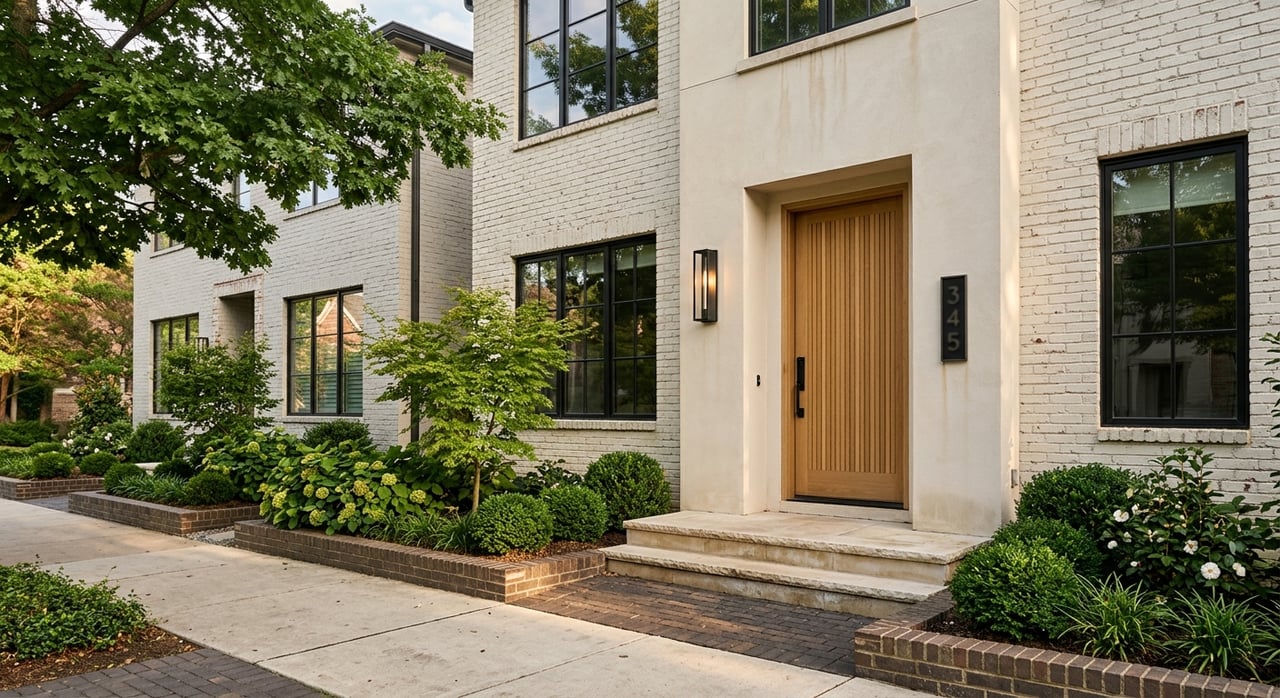
Thinking about living intown Atlanta? The answer is not as simple as “city life.” Intown Atlanta feels more like a collection of connected neighborhoods, each with its own pace, housing mix, and daily rhythm. If you are trying to decide whether intown living fits your lifestyle, this guide will help you understand what day-to-day life looks like, what homes cost, and what to expect as you compare areas. Let’s dive in.
Intown Atlanta at a Glance
Intown Atlanta generally refers to the central neighborhoods and nearby districts around Downtown and Midtown, including areas like Old Fourth Ward, Inman Park, Poncey-Highland, Grant Park, Virginia Highland, Candler Park, and Little 5 Points. The city’s planning and district materials support that broader view of intown as a group of close-in neighborhoods rather than one single downtown core.
That matters because your experience can change quickly from one area to the next. One neighborhood may feel condo-heavy and transit-oriented, while another feels historic, residential, and centered around parks or local business corridors.
Neighborhood Feel Is Highly Varied
One of the biggest surprises for many buyers is how distinct intown neighborhoods feel from each other. Instead of one uniform urban environment, you get a patchwork of smaller districts with their own street patterns, architecture, and local hangouts.
According to Atlanta’s Main Street program, Virginia Highland is known for a tree-lined stretch of North Highland Avenue with restaurants, shops, fitness, and wellness businesses. Little 5 Points stands out for its independent businesses and recognizable local identity, while West End offers a historic community close to Downtown and the BeltLine Westside Trail.
This is a big reason intown Atlanta appeals to so many different buyers. You are not choosing “the city” in a general sense. You are choosing a specific neighborhood pattern, daily routine, and version of city access.
Historic Character Shapes the Experience
Many intown neighborhoods have older housing, established street grids, and a strong sense of place. In some areas, historic preservation plays a major role in how the neighborhood looks and evolves over time.
For example, the city approved a historic district in Poncey-Highland that includes more than 260 contributing historic buildings. For you as a buyer or future seller, that can translate into streets with older homes, more architectural variety, and a neighborhood identity that feels more layered than a newer master-planned area.
Daily Life Often Centers on Trails and Local Corridors
A big part of intown living is how often your routine happens outside the car. In many neighborhoods, daily life revolves around walking to coffee, biking to dinner, spending time in parks, or using the BeltLine to connect different parts of the city.
Atlanta BeltLine reports almost 11 miles of completed trail plus another 10 miles of connector trails. Its trail-oriented destinations include places like Krog Street Market, Ponce City Market, Lee + White, and The Beacon, which helps explain why so much intown activity clusters around outdoor access, patios, and neighborhood retail.
That does not mean every intown neighborhood works the same way. Some areas support a more car-light routine, while others still rely more heavily on driving for errands and commuting.
Walkability Changes by Neighborhood
If walkability matters to you, neighborhood choice is everything. Intown Atlanta includes very walkable pockets, but it is not uniformly easy to live without a car.
Redfin walkability data shows Inman Park at 87 for walkability and 82 for biking, while Old Fourth Ward scores 82 for walkability and 85 for biking. Virginia Highland comes in at 77 for walkability, and Grant Park at 59, showing a meaningful difference in how daily movement may feel depending on where you live.
Transit Access Is Better Than Many Atlanta Areas
Intown Atlanta is one of the better-connected parts of the region when it comes to transit. MARTA rail serves key stations including Midtown, Arts Center, Inman Park/Reynoldstown, Five Points, Georgia State, Vine City, and West End, and the Atlanta Streetcar adds another option within the downtown core.
Even so, it is smart to be realistic. The Atlanta region is still largely car-oriented, and the ARC 2025 Regional Commuter Survey found that alternative commuting modes remain below 2019 levels. In practical terms, intown living may reduce how much you drive, but many households still keep a car in the mix.
Housing Options Are Broad
Another strength of intown Atlanta is housing variety. Instead of one dominant home type, you will find condos, lofts, townhomes, historic single-family homes, and some duplex or triplex-style properties depending on the neighborhood.
City materials note that at least 2,418 two- and three-family units already exist in single-family-zoned neighborhoods such as Virginia Highland and West End. The BeltLine inclusionary zoning program also applies to qualifying multifamily development in areas near the BeltLine corridor or Westside Overlay District, which adds to the mix.
That range gives you more ways to match your budget and lifestyle. If you want a lower-maintenance condo close to transit, your search may look very different from someone who wants a historic bungalow near a park.
Home Prices Vary More Than You Might Expect
One of the most important things to know about intown Atlanta is that pricing changes a lot by neighborhood. You should not assume one price point applies across the whole area.
Zillow places Atlanta’s citywide average home value at about $381,549, with average rent around $1,888. Within intown, neighborhood-level figures from Redfin show a wide spread, from $265K in Downtown to $418K in Midtown, $457K in Old Fourth Ward, $559K in Virginia Highland, $574K in Grant Park, $850K in Inman Park, and $885K in Candler Park.
Quick Price Snapshot
| Neighborhood | Median Sale Price |
|---|---|
| Downtown | $265K |
| Midtown | $418K |
| Old Fourth Ward | $457K |
| Virginia Highland | $559K |
| Grant Park | $574K |
| Inman Park | $850K |
| Candler Park | $885K |
These numbers are best used as a directional snapshot. They show why intown Atlanta can work for very different budgets, but they also reinforce the need to compare neighborhoods carefully instead of treating intown as one single market.
Parks Are a Big Part of the Lifestyle
For a central city area, intown Atlanta offers impressive access to greenspace. That is one reason many buyers describe it as urban but still outdoorsy.
Freedom Park includes more than 130 acres and eight miles of paths across seven surrounding neighborhoods. Piedmont Park offers more than 200 acres of green space, while Historic Fourth Ward Park reclaimed 17 underutilized acres and Shirley Clarke Franklin Park adds trails, meadows, pavilions, and skyline views.
The BeltLine helps connect many of these outdoor spaces to dining and retail areas, especially on the east and west sides. That blend of recreation and convenience is part of what makes intown life feel active and flexible.
What Buyers Should Consider
If you are thinking about moving intown, the best decision usually comes down to a few practical factors. It helps to compare neighborhoods based on how you actually want to live, not just on what sounds appealing in a quick online search.
Focus on these questions:
- How important is walkability for your daily routine?
- Do you want to be near the BeltLine or major parks?
- Would transit access change how often you drive?
- Do you prefer a condo, townhome, or detached home?
- What price tier feels comfortable for your budget and long-term plans?
For many buyers, neighborhoods like Inman Park and Old Fourth Ward may stand out for more car-light living, while Grant Park and Virginia Highland may appeal more for historic neighborhood character. Midtown often fits buyers looking for a more urban-core housing mix.
What Sellers Should Know
If you own a home intown, your neighborhood matters just as much as your property itself. Buyers often shop for a combination of location, housing type, trail access, park proximity, and street-level character.
Market pace also varies noticeably by neighborhood. Redfin reports average days on market of about 19 days in Virginia Highland, 56 days in Inman Park, 81 days in Grant Park, and 85 days in Midtown. That is a strong reminder that pricing, prep, and marketing should be tailored to your specific area rather than based on broad citywide assumptions.
When you sell intown Atlanta real estate, strategy matters. The right positioning can help you highlight the lifestyle features buyers are really paying for, whether that is architecture, proximity to trails, walkability, or a lower-maintenance urban setup.
The Bottom Line on Intown Atlanta
Living intown Atlanta means choosing from several different versions of city life. Some neighborhoods feel highly walkable and connected to transit, some feel rooted in historic homes and established streets, and others blend parks, dining, and mixed-use living in a way that feels uniquely Atlanta.
If you are buying, the key is finding the right fit for your budget, routine, and priorities. If you are selling, the key is understanding how your specific neighborhood competes and how to market its strengths clearly. If you want local guidance on buying or selling intown, connect with Josh Jennings for a strategic, clear plan tailored to your goals.
FAQs
What does intown Atlanta include?
- Intown Atlanta generally refers to central neighborhoods and nearby districts around Downtown and Midtown, including areas such as Old Fourth Ward, Inman Park, Poncey-Highland, Grant Park, Virginia Highland, Candler Park, and Little 5 Points.
Is intown Atlanta walkable for daily living?
- Some intown neighborhoods are highly walkable, especially places like Inman Park and Old Fourth Ward, but walkability varies a lot by neighborhood.
Is intown Atlanta expensive compared to the rest of Atlanta?
- Intown Atlanta includes a wide range of price points, with examples in the research ranging from about $265K in Downtown to $885K in Candler Park.
Can you live in intown Atlanta without a car?
- In some neighborhoods, you may be able to drive less thanks to transit, trails, and nearby businesses, but many households still keep a car because the region remains broadly car-oriented.
What types of homes are common in intown Atlanta?
- Intown Atlanta includes condos, lofts, townhomes, older single-family homes, and some duplex or triplex-style properties, depending on the neighborhood.
Are parks a major part of intown Atlanta living?
- Yes, parks and trails are a major lifestyle feature, with places like Freedom Park, Piedmont Park, Historic Fourth Ward Park, and the BeltLine shaping how many residents spend their time.