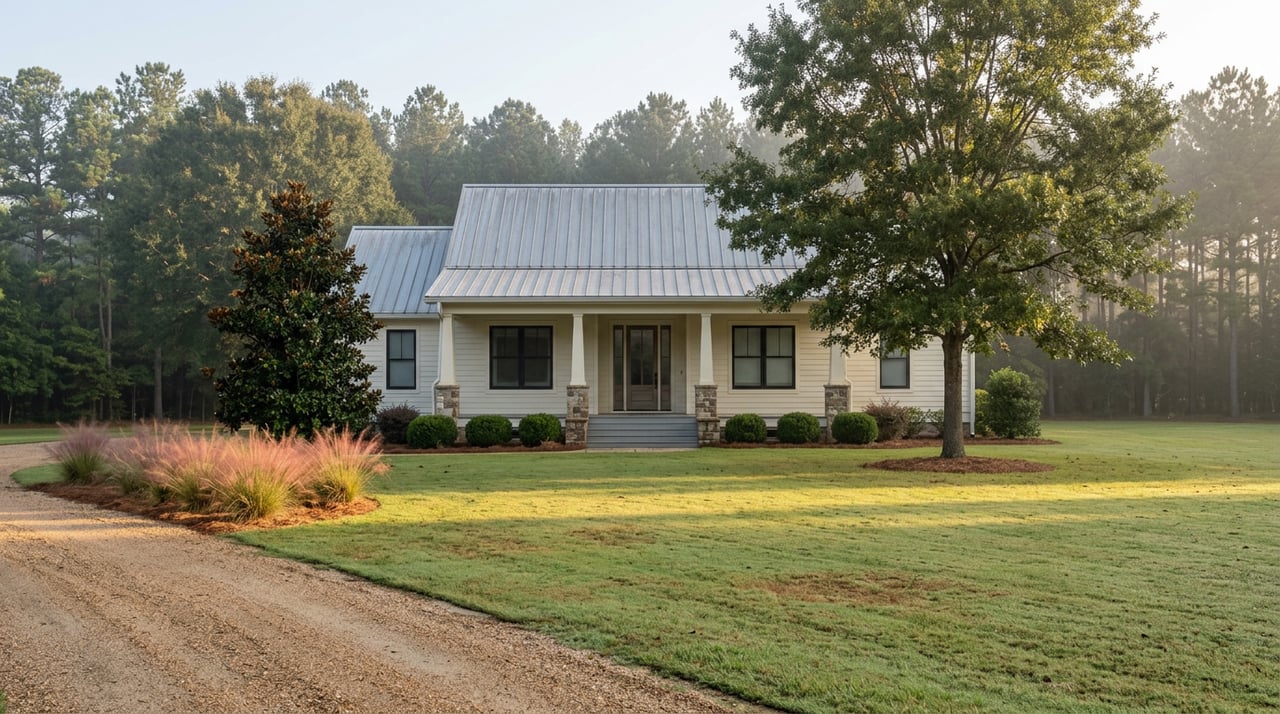
An Atlanta condo owner who decides to trade a downtown high-rise for five acres outside Carrollton runs into the same question almost every time: what happens to the septic tank and well when I close?
Most assume the answer lives in the same disclosure paperwork that covers the roof, the HVAC, and whether the basement ever flooded. It doesn't, not really. Georgia's rule for septic and well systems is simpler and stranger than that. The state has almost nothing to say about it. The bank has quite a lot to say about it. And the gap between those two facts is where Carrollton deals either sail through or stall out in the last two weeks before closing.
The Form Only Asks What You Already Know
Every Georgia home sale that uses the standard paperwork includes the Georgia Association of REALTORS Seller's Property Disclosure Statement, a document that asks whether the water source is a well, whether it's been tested in the past twelve months, and whether the sewer system is public, private, or septic. Sellers answer to the best of their knowledge. That phrase carries the whole weight of the form.
Caveat emptor or "buyer beware" is the law in Georgia.
That line sits inside the disclosure paperwork itself, and it changes what the form is actually for. It isn't a state inspection substitute. A septic system that's been quietly stressed for years but never officially failed on the seller's watch can answer every disclosure question honestly and still be a problem the buyer inherits. HomeLight notes that Georgia sellers aren't even required to complete the form at all, though most do.
The State Steps Back, Your Lender Steps In
Here's the part that surprises people moving out of Atlanta's public water and sewer grid. According to Septic and Well, Georgia does not mandate a septic inspection at the state or county level for a property sale. No agency shows up to sign off before the deed transfers.
What actually forces the issue is the buyer's financing. FHA, VA, and most conventional lenders require proof of a functioning system before they'll fund the loan, which means the inspection Carrollton buyers think of as a government requirement is really an underwriting requirement. With an estimated 1.0 to 1.3 million homes on septic systems across Georgia, this isn't a rare edge case for West Georgia buyers. It's a routine part of financing a home outside a municipal utility footprint.
On a rural or acreage property, skipping an inspection means taking on a system's condition sight unseen, which is a bigger financial risk than the inspection fee it would have cost to check.
What the Inspection Actually Costs
| Step | Typical Cost | Usually Ordered By |
|---|---|---|
| County Performance Evaluation Report | $400 to $600 | Buyer, at lender's request |
| Private DPH-certified inspection | $300 to $500 | Buyer, when lender accepts a private inspector |
| Tank pump-out ahead of inspection | $237 to $375 | Seller pre-listing, or buyer at inspection |
A full Performance Evaluation runs two to four hours and covers tank pumping, compartment inspection, drain field assessment, and documentation. Most inspectors need the tank pumped first anyway, since a full tank hides the condition of both compartments.
Why Carrollton's Ground Makes This More Than Paperwork
Carroll County's terrain adds a layer most disclosure forms never touch. Local septic contractors describe Carrollton's red clay soil and rolling terrain as requiring expert system design from the start, and properties near the Little Tallapoosa River or in low-lying areas often need specialized drain field solutions to handle seasonal water table swings. Porous limestone under parts of the county compounds it, since high water tables directly affect how well a drain field performs and how often a tank needs pumping.
That's why Carrollton has more system variety than a typical suburban subdivision:
- Chamber systems using plastic chambers instead of gravel trenches, common in Carrollton's soil conditions
- Pressure distribution systems that push wastewater evenly across a drain field for better treatment
- Mound systems with elevated drain fields, built for properties with high water tables
- Aerobic treatment units requiring scheduled pumping and separate aeration equipment service
Most Carrollton homes run 750 to 1,500 gallon tanks, and the general local guidance is pumping every three to five years, though a property near the river or on a high water table may need it sooner. None of that shows up on the disclosure form. It shows up in the inspection, which is exactly why the timing of that inspection matters so much.
The Moment It Actually Costs You Something
A failed inspection doesn't just create paperwork. A failed septic system can kill a sale outright or knock $10,000 to $30,000 off the purchase price once a buyer factors in the repair. That number lands hardest because of where it typically surfaces in the timeline, deep into underwriting, often after the buyer has already given notice on an apartment or gone under contract to sell their own home.
Buyers who find a problem at that stage generally have three paths: negotiate a price reduction, ask the seller to complete repairs before closing, or set up an escrow holdback to cover the cost after closing. In practice, sellers often spend less fixing a known issue before it's found than they lose in the discount a buyer demands once it is found.
There's also a quieter risk building in competitive corners of the metro Atlanta market. Some buyers waive inspection contingencies entirely to win a bidding war. On a property with public water and sewer, that's a calculated risk. On a property with a private well and septic system, it's a different kind of bet, since there's no municipal system backing up the water or waste line if something goes wrong.
The One Move That Flips the Leverage
Sellers who pump the tank before listing let an inspector assess both compartments properly and walk into the transaction with documentation instead of guesswork. A recently pumped tank with clean records is one of the strongest signals a seller can put in front of a buyer, and it shifts the conversation from "prove this works" to "here's proof it works."
The same logic applies to well water. The disclosure form itself asks whether the water has been tested in the past twelve months, which tells you what a reasonable buyer expects. Sellers who test ahead of listing, and buyers who ask for that test before they're deep into underwriting, both save themselves a scramble that otherwise happens on someone else's timeline.
A Few Questions That Come Up Often
Does Carroll County require a permit for septic repairs? Georgia's Department of Public Health regulates on-site sewage systems at the county environmental health level, and repairs to an existing system typically go through that office rather than city planning. Anyone budgeting for repairs should confirm current requirements with Carroll County's environmental health office before work starts.
How often should well water actually be tested? Georgia's own disclosure form treats twelve months as the benchmark question buyers will ask. That's a reasonable rhythm for anyone on a private well, not just around a sale.
Can a seller just sell "as is" and skip disclosure? "As is" doesn't erase the duty to share known material defects, form or no form.
None of this is legal or financial advice, and specifics can shift by lender and by county, so loop in your closing attorney and loan officer early if a well or septic system is part of the deal.
Where This Leaves You
The inspection protects the buyer from a bad system. The lender is the one who actually forces the second thing to happen, and it happens late, which is exactly when it hurts the most if nobody planned for it.
If you're weighing a move onto acreage in Carroll County, or getting ready to list a property that runs on well and septic, the smartest time to deal with any of this is before it's someone else's underwriting deadline. Josh Jennings Real Estate works Carrollton and the rest of West Georgia every week, and knows which contractors, which soil conditions, and which lender quirks tend to show up on properties like yours. Schedule Your Free Consultation and let's map out the timeline before the bank does it for you.